
Bambu Lab A2L — What 105% More Build Volume Actually Means
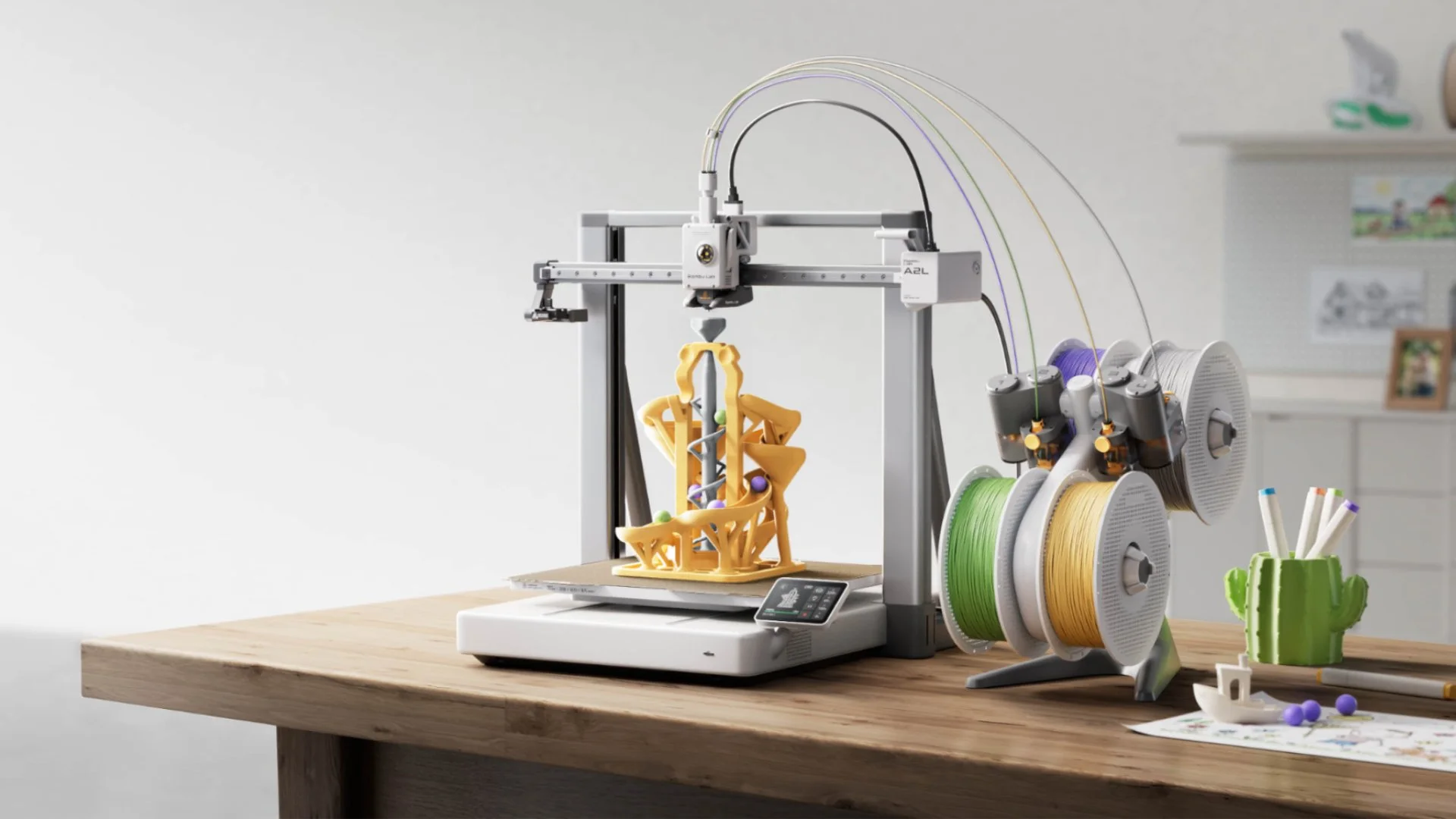
The moment SO many have been waiting for is here. Bambu Lab release the ‘Extra Large’ cheap 3D printer! But usually, when you get a bigger bed, the trade-off is either prohibitive cost or diminished reliability. The A2L seems to be trying to solve that problem: offering massive volume without abandoning the user experience we've come to expect from Bambu Lab’s smaller machines.
What is new with Bambu Lab A2L
The bigger size for starters, 330 × 320 × 325 mm build volume is a big step up from the A1/P1/X1 series 3D printers, and it perfectly matches the same H2 sizes. Although it’s not huge and might not fit everyone needs (I know some of you wish for 400mm+) it’s really a good position in the Bambu Lab ecosystem.
But it's not just size: There are several high-end features into this budget 3D printer that usually belonged to Bambu Labs premium, professional lines:
Advanced Motion Control: The integration of a Closed-Loop PMSM Servo Motor gives the machine stable power delivery even when pushing speeds and handling heavy loads.
Vibration Management: Bambu Lab mention Adaptive Vibration Compensation, which is key for tall prints. Instead of just hoping things look good, this system calibrates multi-point load adaptation to fight ghosting and ringing artifacts dynamically. This should be a huge win when printing tall or massive structures, without having to slow down too much.
Modularity/Versatility: The inclusion of the Blade Cutting Upgrade Kit means the machine isn't just an extruder; it’s advertised as becoming a precision cutter, plotter for leather, stickers, and fabric. That opens up entirely new revenue streams right out of the box.
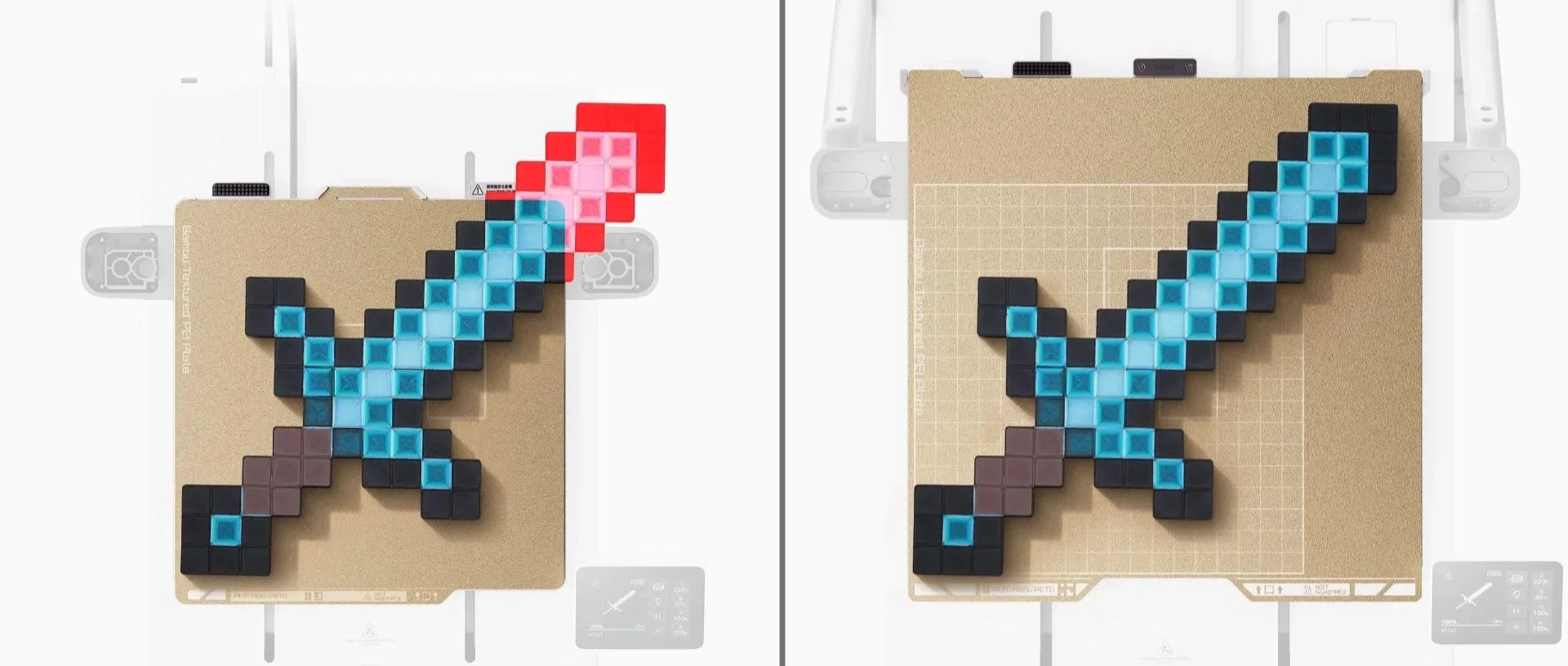
A handy dandy illustration showing how much larger print surface you have with the A2L!
Breaking down the tech
When I look at the A2L specs, and especially when comparing them to what we see in other large-format machines on the market—a few things stand out regarding how this engineering stack is intended to function for a user like me.
The Good:
Stability and Scale. The combination of Adaptive Vibration Compensation, integrated with physical Granular Dampers, directly addresses one of the biggest issues when printing at scale on a moving bed: structural integrity during motion. When you print something that tall, or something heavy across its entire base, the resonance can shake the whole thing apart—literally creating visible artifacts (ringing). By actively dampening these vibrations and adapting compensation based on load, Bambu Lab is trying to give a large bed slinger the surface quality usually reserved for much more rigid, expensive machines.
The Trade-off: Size vs. Adhesion. This will be a challenge and a whole new problem for many, specially if they have only worked with PLA at 180-220mm build volumes before. Larger footprint and the greater the thermal gradient between the build plate and the ambient air (especially in a cooler workshop environment), the higher the risk of corner lift or warping.
Bambu Labs marketing focuses heavily on speed and motion control, but large prints require exceptional adhesion management. I want to see how this system handles warp-prone filaments over long prints. Are the magnets strong enough to hold down the buildplate?
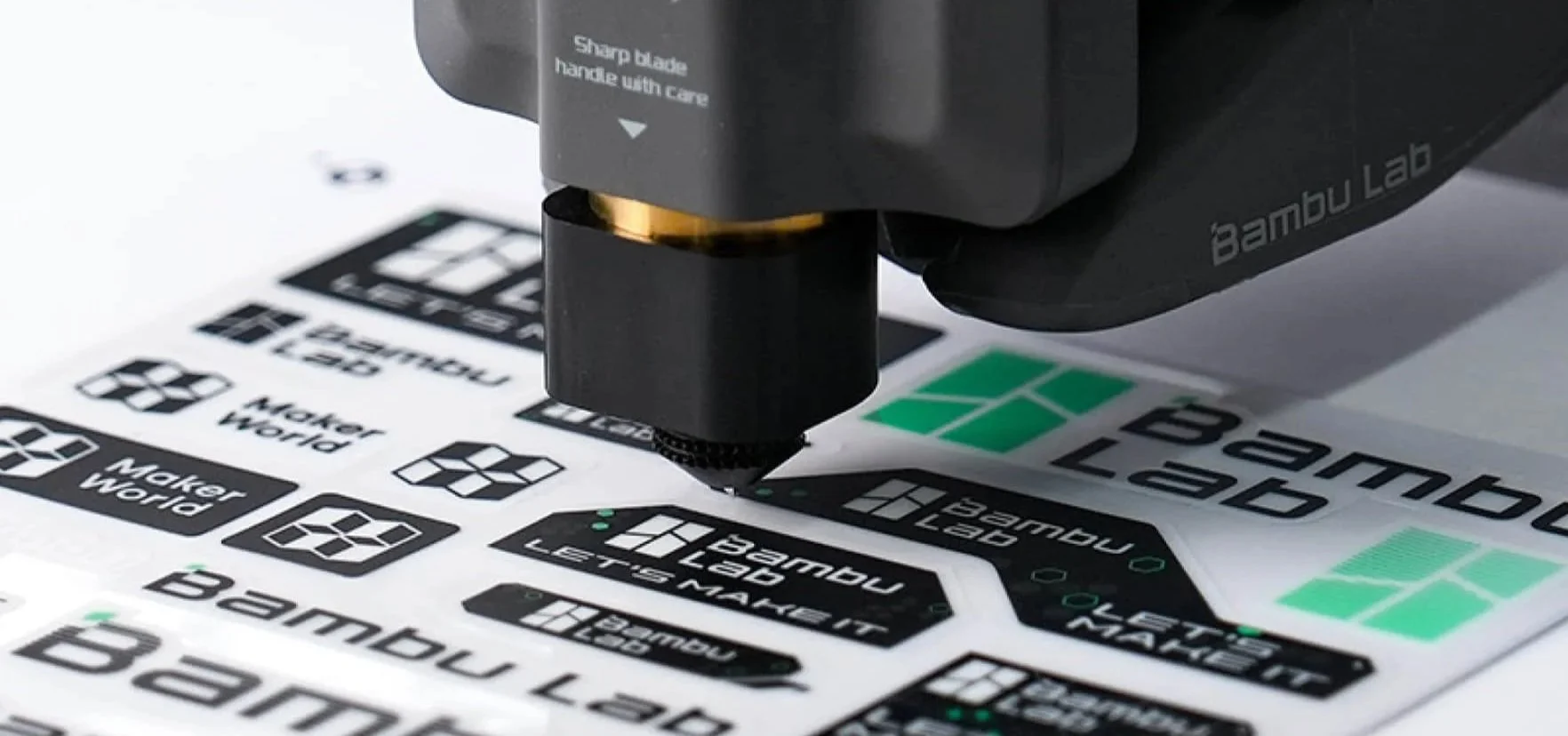
The optional cutter and pen plotter can help you elevate your projects with decals and cool posters. Laser module (from H2-series) is not an option due to safety.
Modularity Bonus: Making the machine a "creative workshop" by adding cutting/plotting capabilities is smart! The large open design enables some fun projects for those that like. Maybe someone can build a “roller” so you can plot on really large papers, or cut large decals by moving the piece, running multiple parts.
I think it’s really nice that you can add the cutting/plotting!
Market Positioning
Where does the Bambu Lab A2L product sit?
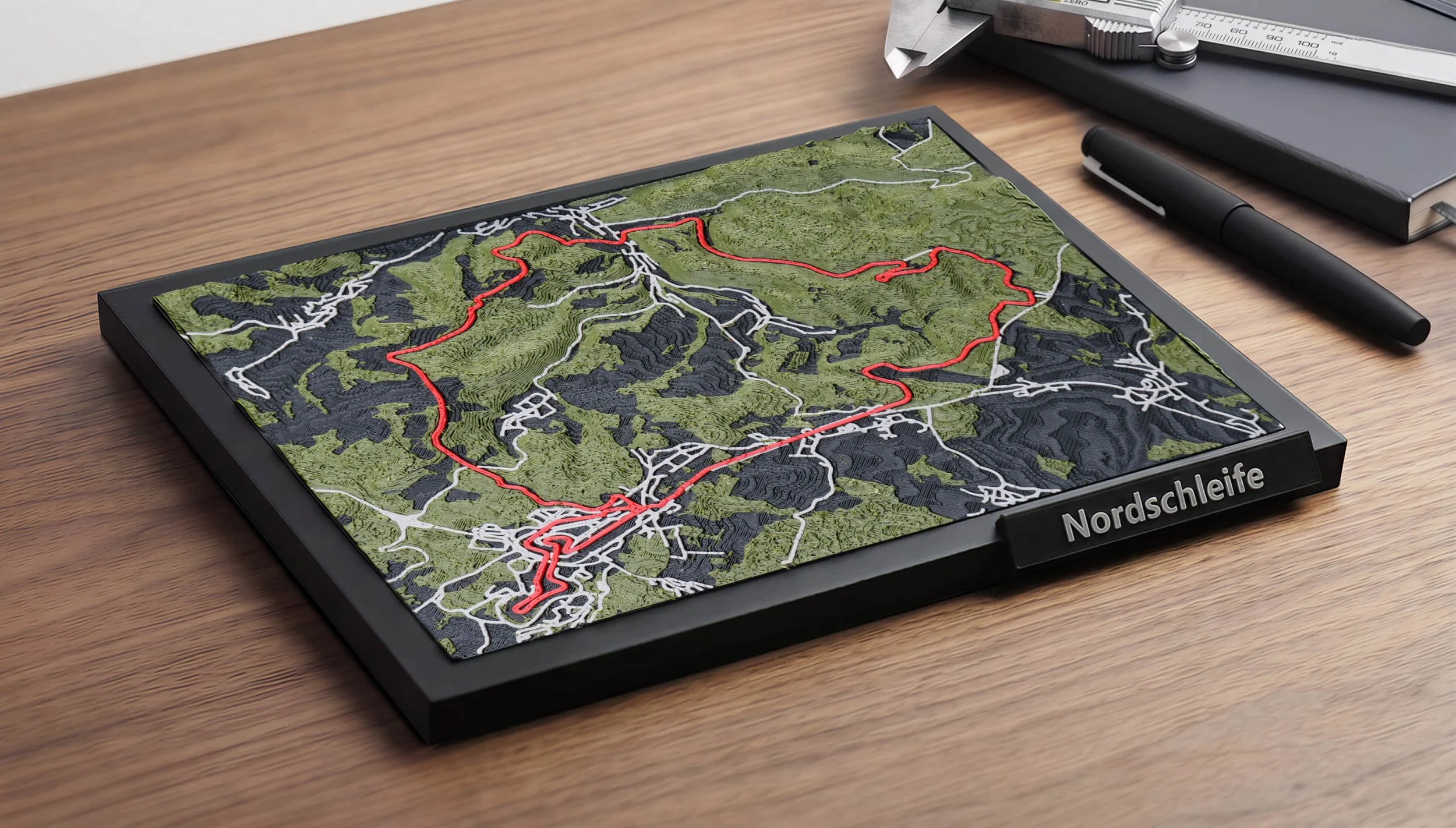
There seems to have been a push to “Copy” bambu Lab A1 and X/P series from other manufacturers. They seem to have done quite well, specially with machines that are a bit larger, like Anycubic or Creality. So for Bambu Lab to push the envelope a bit, and keep the price as low at is is, I think is a smart move to keep users in their ecosystem.
Bambu Lab A2L Price and value
The Bambu Lab A2L is on sale NOW for $469 for the machine itself, and $569 Combo (AMS Lite).
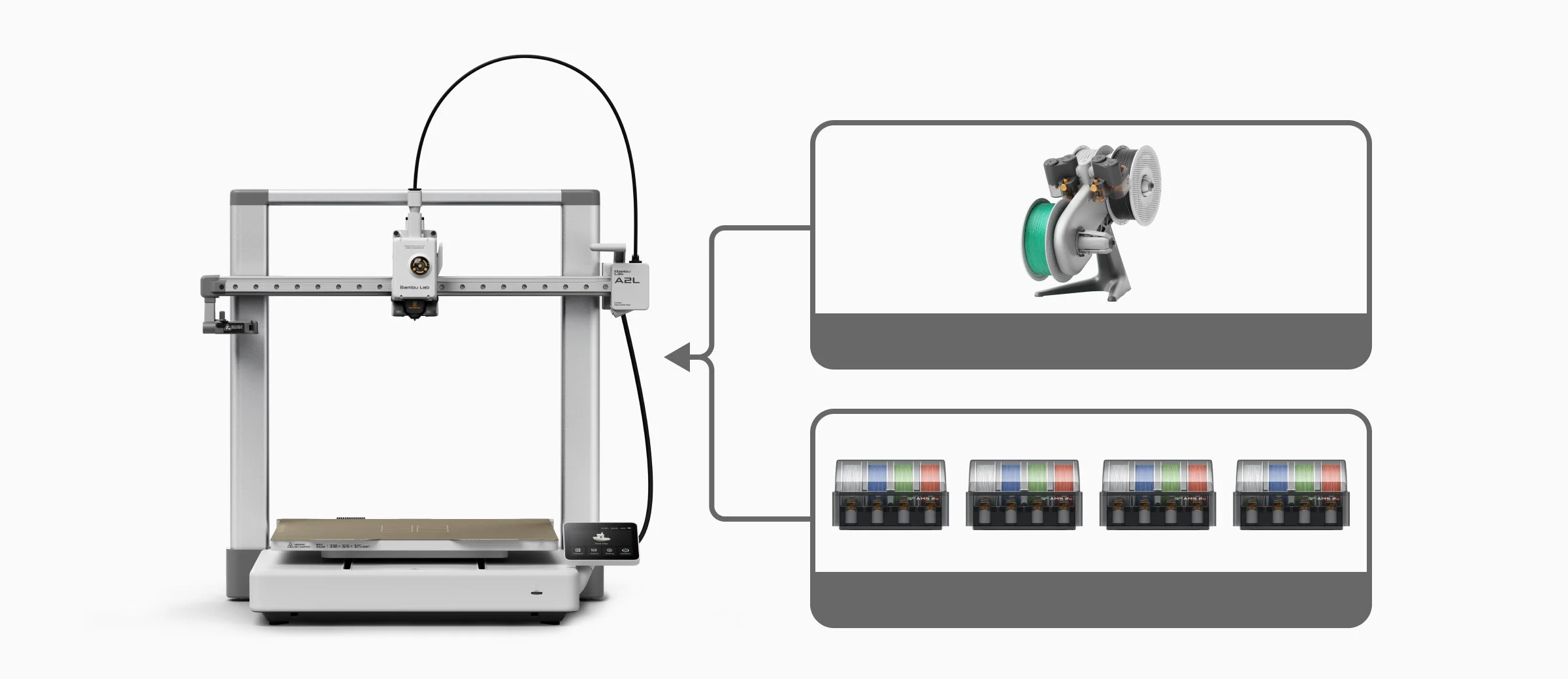
Whats nice about the A2L Is that you can still plug in up to 4 AMS units (and a AMS Lite) so that you end up with 19 colors. It’s going to be slow and a lot of material changes and waste, but it IS possible ;).
Bambu Lab A2L Specs:
Build volume: 330 × 320 × 325 mm
Max Bed Temperature: 80°C
Max Nozzle Temperature: 300°C
Print Speed: 500 mm/sec (theoretical)
Supported Materials: PLA, PETG, and other non-engineering filaments
Maximum Number of Colors: up to 4 AMS units and 1 AMS lite, enabling up to 19 colors
Extrusion System: PMSM closed-loop servo
Vibration Compensation: Adaptive, multi-point
Granular Dampers: 2 (integrated into the frame)
Additional Modules: Blade Cutting, Pen Plotting
Connectivity: 2.4G WiFi
External Dimensions: 544 x 529 x 505 mm
Weight: 12.8 kg
