
3DMakerPro Raven Breakdown: The $999 LiDAR Scanner — Specs, Pricing & Comparison
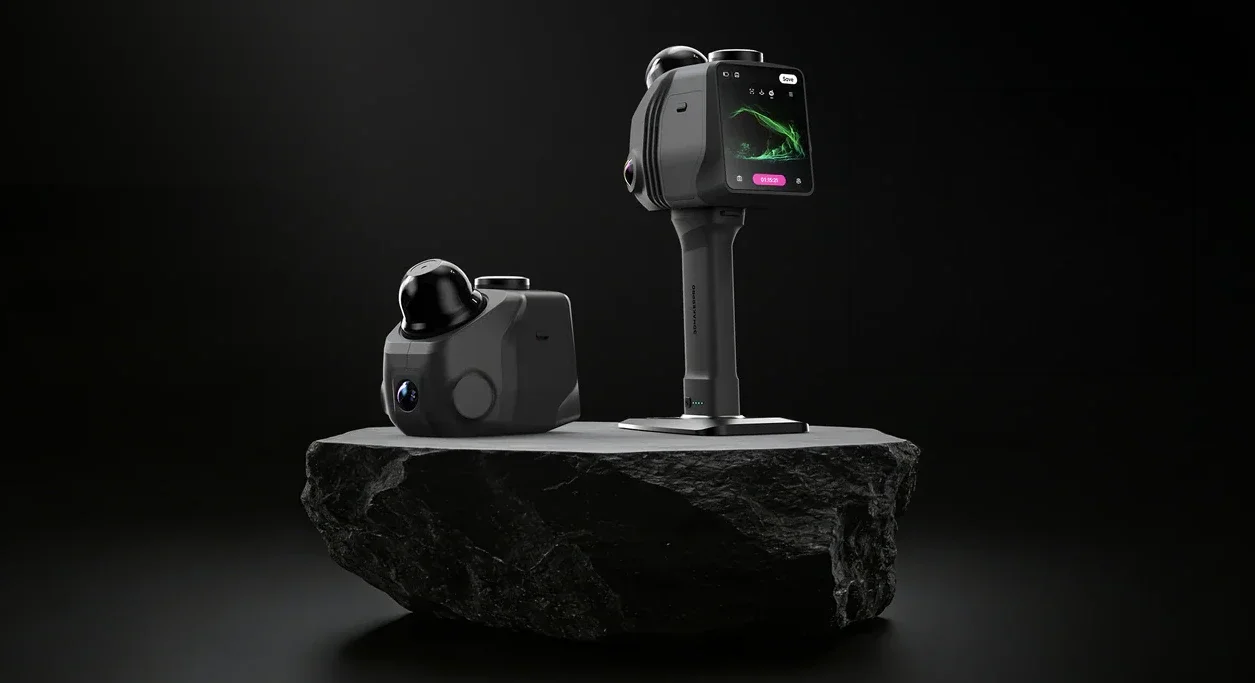
The handheld LiDAR scanner market just got a lot more interesting. 3DMakerPro has officially launched the Raven, and with an early-bird price starting at $999, it’s undercutting every standalone LiDAR/SLAM scanner on the market by a significant margin. But a low price only matters if the hardware delivers.
Here’s a deep look at the specs, where the Raven fits in 3DMakerPro’s lineup, how it stacks up against the competition from FJD Trion, SHARE, and others — and what the community is already flagging as potential concerns.
What Is the 3DMakerPro Raven?
The Raven is 3DMakerPro’s entry-level LiDAR spatial scanner — a smaller, lighter, and significantly cheaper alternative to their existing Eagle (launched early 2025) and the professional-grade Hawk.
Considering 3DMakerPro’s progression from structured-light object scanners (Mole, Seal, Moose) into spatial LiDAR territory with the Eagle, the Raven is the logical next step: bringing standalone handheld LiDAR scanning down to a price point where hobbyists, content creators, and small businesses can realistically justify the purchase.
The device was first spotted at Formnext 2024, where early hands-on impressions noted it looked like a compact version of the Hawk, with an RTK expansion slot, a touchscreen, and a $999 target price. Those early details have now been confirmed by the official spec sheet and pricing tiers on the 3DMakerPro store page.

For anyone unfamiliar with 3DMakerPro’s scanning workflow, my videos on the Eagle scanner give a good overview of the RayStudio software pipeline, the scanning process, and the general output quality you can expect. The Raven shares the same software ecosystem and output formats, so those walkthroughs are directly relevant context for what the Raven experience will be like.
3DMakerPro Raven Specs
From 3DMakerPro’s published spec sheet:
Accuracy: 2cm @ 10m, 3cm @ 20m, 5cm @ 40m
LiDAR detection range: 40m @ 10% reflectivity / 50m @ 80% reflectivity
Max scan coverage: 80–100m (Note: 3DMakerPro lists this as “scan range” — see clarification below)
Field of view: 360° horizontal × 40° vertical
Point cloud frequency: 150,000 pts/sec
Laser: 905nm, Class 1 eye-safe (IEC60825-1:2014)
Camera: 12MP, 1-camera or (2-camera system for MAX version)
HDR mode: No
Screen: 3.9” AMOLED
Battery: 12,000mAh — approx. 2 hours of work, supports external power while charging
Weight: 1.1kg
Dimensions: 148 × 288 × 98mm
On-board processing: 8-core, 2.4GHz, 32GB storage (TF card expandable)
Data interface: USB-C ×1
Power delivery: USB-C ×1
Network: Wi-Fi 5
Output formats: 3D Color Point Cloud PLY, 3D Gaussian Splatting PLY, 3D Colored Polygonal Model OBJ
Expansion: RTK expansion kit, Insta360 X4/X5 expansion kit, various accessories
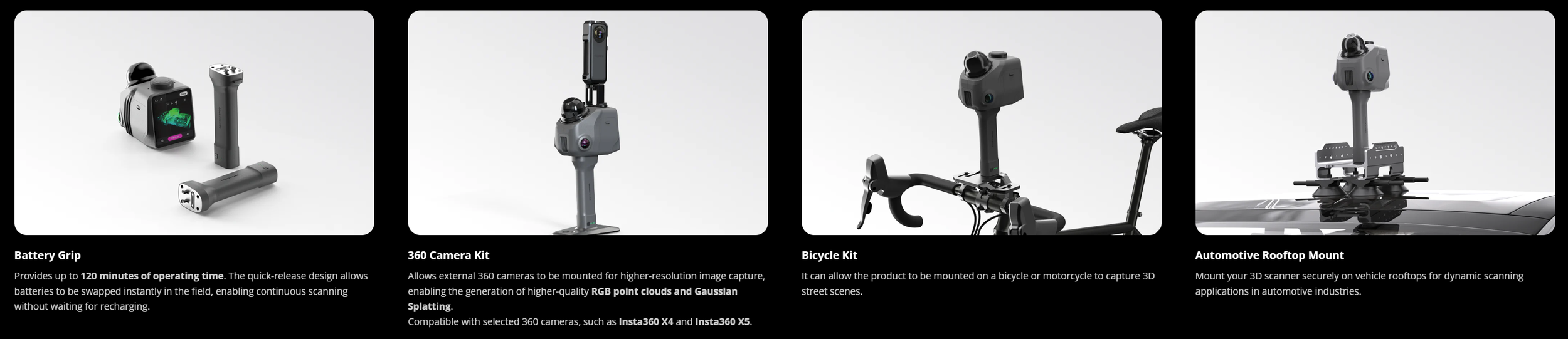
Here’s some of the available accessories from start for the Raven. The 360 camera kit will be very useful for anyone looking to do hybrid workflows!
A Note on “Scan Range” vs “Scan Radius” — Read This Before Comparing
This is a detail that is really confusing when comparing LiDAR scanners, and it’s worth getting right. 3DMakerPro uses two separate specs that sound similar but mean different things: “Scan radius” is the LiDAR detection distance — how far the laser can detect a surface from the device. “Scan range” is roughly the total coverage diameter (approximately 2× the radius). So when 3DMakerPro says the Eagle has a “140m scan range,” that corresponds to a 70m detection radius.
FJD Trion, SHARE, and Livox all specify “scanning range” as the detection distance — equivalent to what 3DMakerPro calls “scan radius.” This means a direct comparison of 3DMakerPro’s “140m range” against FJD’s “70m range” is misleading — they’re actually describing the same capability. Every comparison in this article uses the consistent metric of LiDAR detection range (how far the sensor reaches) at 80% surface reflectivity, unless otherwise noted.
3DMakerPro Raven Pricing
This is where the Raven gets you. Four configurations are available at launch, at early-bird pricing:
UPDATE (13 March): I have a unique discount code if you’re interested in this scanner. Code ‘Save80’ gets you $80 offfrom this link!
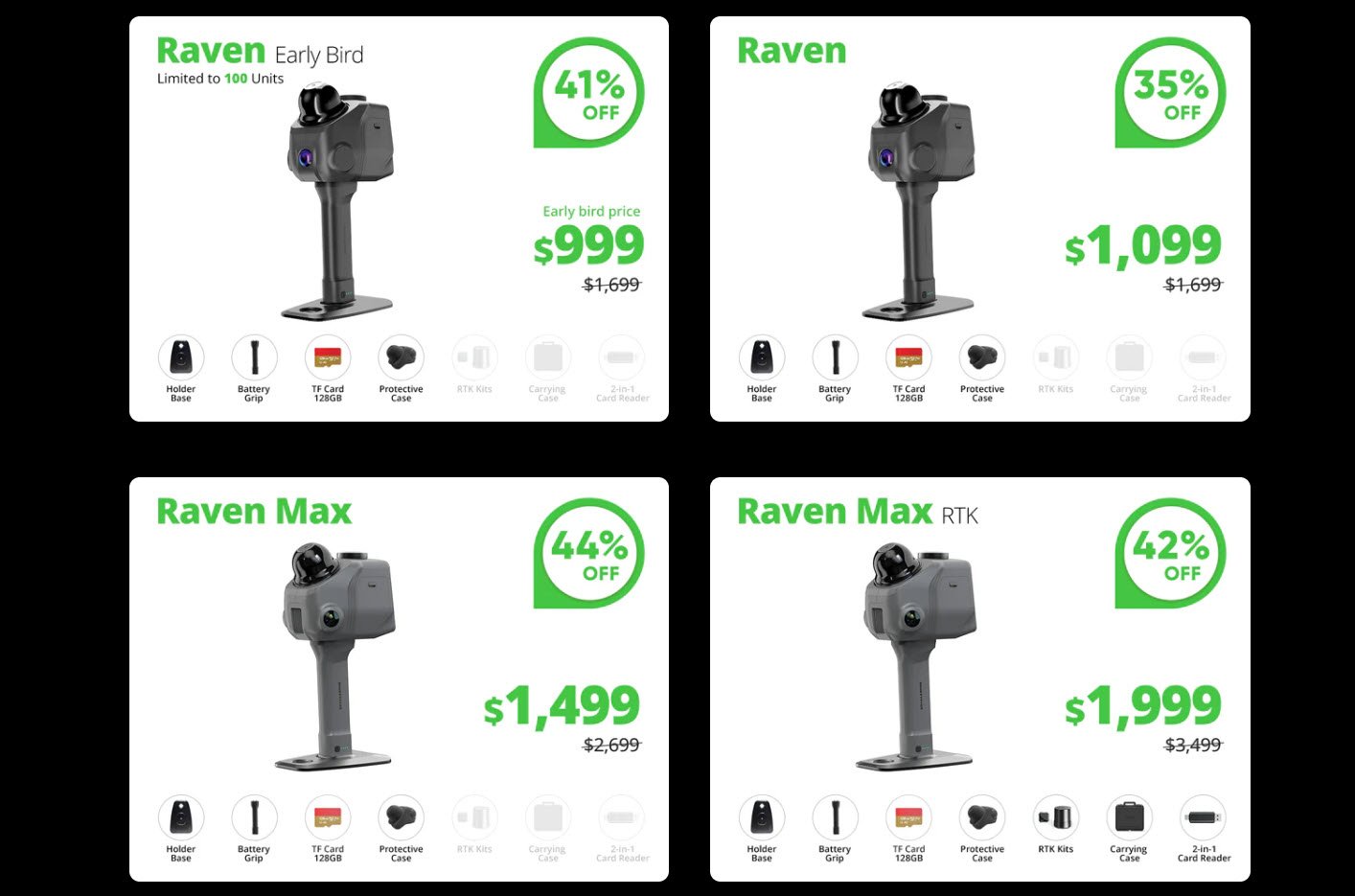
| Variant | Launch Price | MSRP | Key Inclusions |
|---|---|---|---|
| Raven Early Bird | $999 (100 units) | $1,699 | Holder base, battery grip, 128GB TF card, protective case |
| Raven | $1,099 | $1,699 | Same as above |
| Raven Max | $1,499 | $2,699 | Adds RTK kit, carrying case, 2-in-1 card reader |
| Raven Max RTK | $1,999 | $3,499 | Full kit with RTK, carrying case, card reader |
For context: the Eagle Standard RTK MSRPs at $3,999, though 3DMakerPro has been running discounts consistently since launch. The Eagle has rarely sold at full MSRP and can often be found in lower price tiers with promos (see current price here). The Hawk starts at around $9,300+. So the Raven’s pricing represents a genuinely new tier for standalone LiDAR scanners.
For existing Eagle owners or anyone who’s been eyeing the Eagle
Keep an eye on Eagle pricing! 3DMakerPro frequently runs promotions, and with the Raven now filling the entry-level slot, Eagle discounts may deepen further. If your needs are closer to the Eagle’s capabilities but you were hesitant at $3,499, the launch of the Raven could indirectly benefit you.
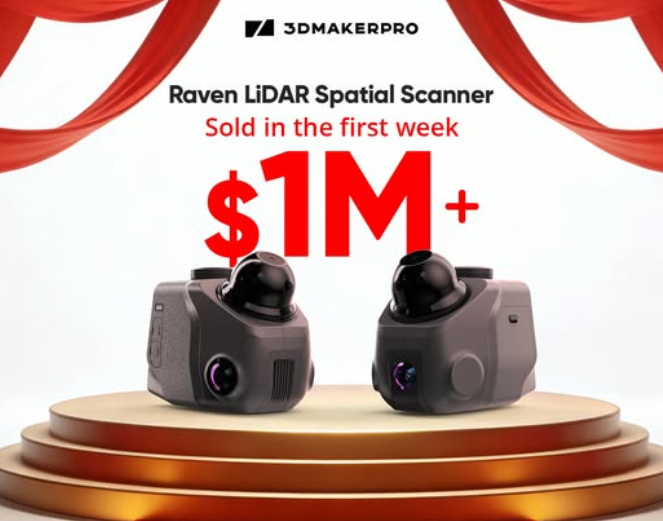
Update on pricing as of march 19 2026: There are only a handful Ravens left at $999. Question is if the price goes up fully to $1699 of if there’s a middle ground. 3DMakerPro has obviously had some success, as their social media channels like to share. This is a good thing!
Luckily, my discount code should still work! $80 off with “SAVE80” using my link.
Raven vs Eagle vs Hawk vs FJD Trion vs SHARE: Full Comparison
Here’s the comparison across the current handheld LiDAR/SLAM scanner field. All LiDAR range figures use detection distance at 80% reflectivity for consistent comparison (see note on scan range vs radius above).
| Spec | Raven | Eagle | Hawk | FJD P2 | FJD V4e | SHARE S20 SE | SHARE C1 |
|---|---|---|---|---|---|---|---|
| Accuracy | 2cm @10m | 2cm @10m | 1.5cm @10m | 1.2cm post | 3cm post | ≤1cm rel. | <1cm |
| LiDAR range* | 50m | 70m | 70m | 70m | 50m | 70m | 70m |
| Pts/sec | 150k | 200k | 480k | 200k | 154k | 200k | 200k |
| Vert. FOV | 40° | 59° | 63.5° | 59° | ~70° | 59° | ~59° |
| Camera | 12MP (1-2) | 48MP (1-4) | 13MP 1" | 2x12MP | Phone | 2x2.3MP | Dual wide |
| HDR | No | 8K HDR | Yes | No | No | No | No |
| Weight | 1.1kg | 1.5kg | ~0.9kg | 0.7kg | 0.89kg | 0.955kg | ~0.575kg |
| Battery | ~2 hrs | ~1 hr | ~1 hr swap | ~4 hrs | 5+ hrs | ~3 hrs | ~3 hrs |
| RTK | Optional | Optional | Built-in | Optional | Built-in | Optional | No |
| Standalone | Yes | Yes | Yes | Yes | No (phone) | No (phone) | No (phone) |
| Gauss. Splat | Yes | Yes | Yes | Yes | Yes | Yes | Coming |
| Price | $999-1,999 | ~$3,399+ | ~$8,999+ | ~$4,000+ | ~$4,299 | ~$4,499+ | $3,999 (KS) |
*LiDAR range = detection distance at 80% surface reflectivity. 3DMakerPro markets Eagle as “140m scan range” and Raven as “100m scan range” — those figures represent total coverage diameter (~2× detection distance), not comparable to FJD/SHARE “scanning range” specs. This table uses the consistent detection distance metric.
Understanding the LiDAR Sensor — Why It Matters
The community is paying close attention to what LiDAR sensor the Raven uses, and for good reason — this is arguably the single most important component in any SLAM scanner.
The Livox Mid-360 has become the de facto standard sensor in this class of handheld SLAM scanners. Manufactured by Livox (a DJI subsidiary), it’s a compact unit with a 360° × 59° field of view, 200,000 points per second, and a proven 70m detection range at 80% reflectivity.
Critically, it has extensive SLAM algorithm support in the open-source robotics community (including Livox’s own LIO-Livox odometry system) and a strong track record in professional surveying and mapping applications. Multiple academic studies have validated its geometric accuracy. According to 3DMakerPro’s own spec sheets, the Eagle uses this sensor class. The FJD Trion P1 and P2 use sensors with matching specifications (200k pts/s, 360° × 59° FOV, 70m range). SHARE has confirmed the S20/S20 SE use the Mid-360 directly, as documented on Livox’s own showcase page.
The Raven’s published specs — 150,000 pts/s, 360° × 40° vertical FOV, 50m detection range — clearly indicate it is not using a Livox Mid-360. The narrower vertical FOV (40° vs. 59°) is the most impactful difference in practice: it means the Raven captures less of the environment per pass, particularly in the vertical axis. Scanning tall structures, capturing ceilings in interior scans, or working in tight spaces will require more overlap passes and additional time. The lower point density (150k vs. 200k) means slightly less detail per second, though this is less dramatic than the FOV limitation.
This isn’t necessarily a dealbreaker since a cheaper sensor is how 3DMakerPro reaches a $999 price point, but it’s a trade-off you should understand.
The LiDAR sensor directly affects point cloud density, SLAM drift resistance, and scan reliability in challenging environments. Community members in the 3DMakerPro Raven and Eagle Facebook groups have flagged this as their primary concern, and it’s a legitimate one.
3DMakerPro has not publicly disclosed the sensor manufacturer or model for the Raven (at least what I can find).
The missing IMU specifications are another gap since the IMU (Inertial Measurement Unit) is critical for SLAM stability and drift control, particularly in featureless environments like long corridors, open fields, or tunnels.
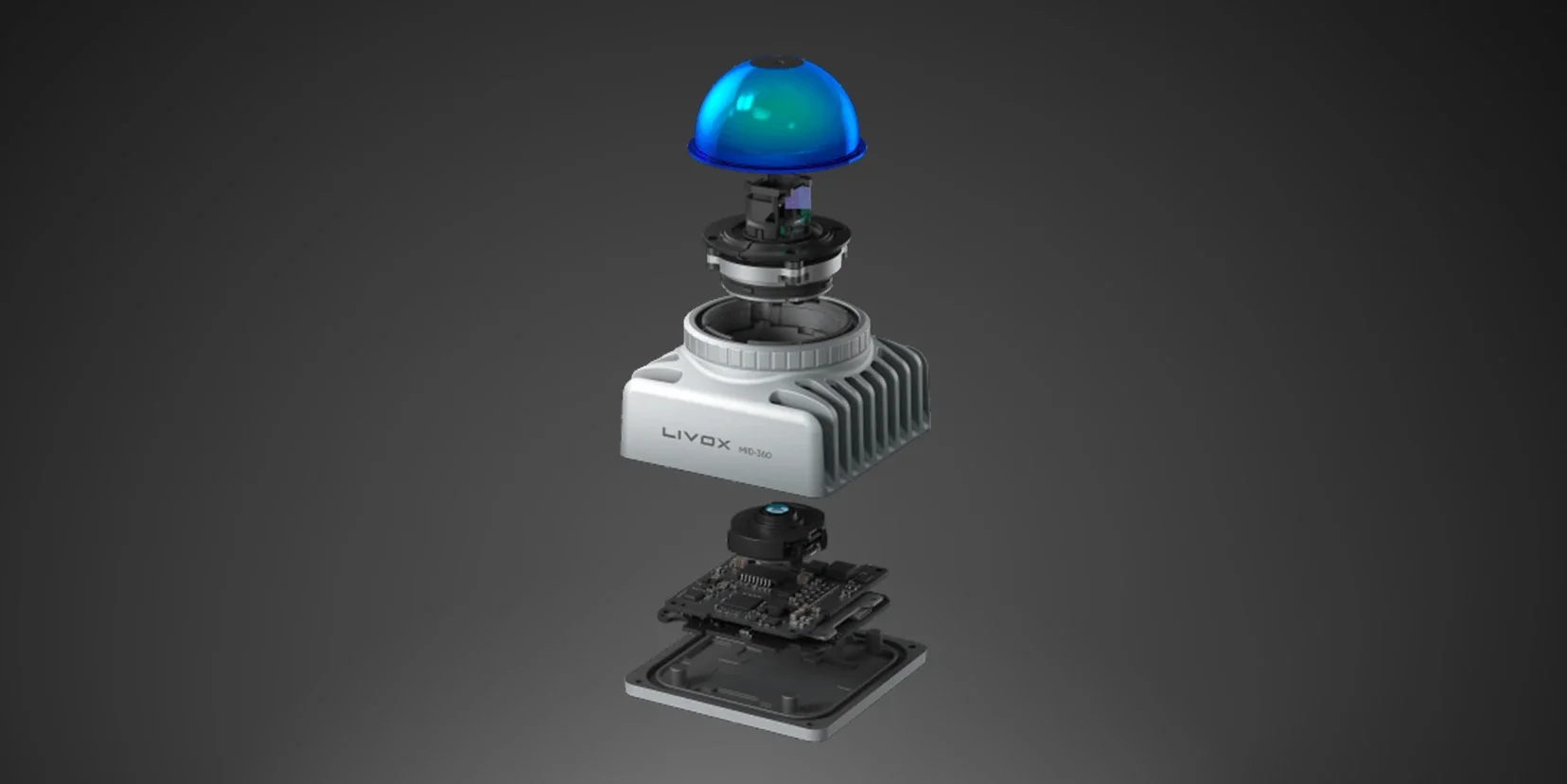
Livox Mid-360 sensor module.
What Stands Out About the 3DMakerPro Raven
The price is genuinely disruptive
At $999–$1,099 for the base Raven, you’re getting a standalone LiDAR scanner with AMOLED touchscreen, onboard processing, and gaussian splatting output. No phone, no laptop, no tethering required during scanning. The FJD Trion V4e LiDAR Kit, the closest budget competitor in the handheld SLAM scanner market, requires an iPhone 15+ and costs over $4,000 (currently $4,299 on sale from $4,799). The SHARE C1 is targeting a similar prosumer audience via Kickstarter, but its final retail pricing and delivery timeline aren’t fully established yet.
Two hours of battery life
Is a meaningful advantage over the Eagle’s approximately one hour (according to 3DMakerPro’s own specs, which lists 60 minutes for the Eagle). You can realistically scan a full building interior or outdoor site without a power bank. Although Raven also supports external power while scanning, which is a practical touch if you accidently left it uncharged.
The Insta360 X4/X5 and RTK expansion
This means the Raven fit more use cases. For those interested in their own workflows using Insta360 for gaussian splatting and RTK/PPK have their own upgrade paths. I like how this approach keeps the entry cost low while leaving room to grow into more professional workflows.
It’s fully standalone
Unlike the FJD V4e (requires iPhone 15+), the FJD P2 (needs a phone or tablet for real-time monitoring via FJD Trion Scan app), and the SHARE S20/C1 line (SHARE Capture app required), the Raven works entirely independently with its built-in 3.9” AMOLED screen and onboard storage. For field use in remote locations or for users who want a simpler grab-and-go workflow, this matters.
Where the Concerns Are
The LiDAR sensor is a clear step down from the competition
As detailed above, the Raven’s 150k pts/s, 40° vertical FOV, and 50m detection range put it below every other scanner in this comparison on LiDAR hardware. The narrower vertical coverage means more scanning passes in complex environments and potentially weaker SLAM lock in vertically varied spaces.
Community members in the 3DMakerPro Raven and Eagle user groups on Facebook have been direct about this concern. The sensor appears to be an inferior unit tailored for lower-end applications, and for workflows where the laser’s performance matters more than the camera, this is a clear trade-off.
No published IMU specifications.
The IMU is essential for SLAM stability and drift control, and experienced users have flagged its absence. But does that mean they aren’t using one (or that it’s just not very impressive), who knows.
3DMakerPro software track record isn’t great.
Having spent a lot of time with the Eagle Max and RayStudio, this is an area where expectations need to be realistic. The Eagle launched in early 2025 with an ambitious software roadmap with Gaussian Splatting processing was scheduled for April 10, 2025, point cloud meshing for April 15, and panoramic image stitching for April 30, according to 3DMakerPro’s own RayStudio tutorial page. In practice, features arrived much later than announced, and independent reviews (including a detailed test by 3Printr.com) consistently described RayStudio as functional but not yet mature.
Stability issues, particularly on macOS, have been well-documented. The post-processing workflow still requires patience. The software has improved over the past year, but it’s been a slow process and since the Raven shares this same software ecosystem, we should expect a similar trajectory rather than a polished “beta-tester” experience.
Let’s just hope that Eagle and Hawk have made the progress needed to make Raven a better launch!

Philipp Kreiser (PrinterForFun) notes skepticism about the Lidar sensor and initial scanning.
RTK = real-time or post-processing only?
This remains somewhat murky across 3DMakerPro’s product line. The Eagle’s official FAQ describes RTK as real-time kinematic positioning, but the RayStudio workflow tutorial on 3DMakerPro’s own blog shows RTK data being applied as a post-processing step (“check the RTK option in the processing steps”).
Community members reports have been mixed on whether true real-time RTK correction is functioning reliably, or whether it’s effectively PPK (post-processed kinematic).
If georeferenced accuracy is important to your workflow, this is worth verifying with real user reviews (hopefully I can get a unit to review for you) before committing to the Raven’s RTK kit.
For comparison, both the FJD Trion line and the SHARE S20 RTK offer well-documented real-time RTK workflows with proven accuracy specifications, but at rather different price ranges.
Early scan samples haven’t been impressive.
Philipp Kreiser’s overview video (PrintedForFun / 3D Scanning Users Group) noted that first published Raven scans didn’t look particularly compelling. Pre-release hardware will improve with firmware and software updates, but as of now there’s limited independent scan data to evaluate real-world performance.
12MP cameras without HDR
Means colorized point clouds and Gaussian Splatting scenes won’t match the visual quality you’d get from the Eagle’s 48MP cameras with 8K HDR output, or the SHARE S20’s dual 16MP 1-inch sensor cameras with mechanical shutters. Where visual fidelity matters — virtual tours, presentation-quality Gaussian Splats, real estate walkthroughs — this is a visible downgrade.
Who Is the Raven Actually For?
The Raven is positioned squarely as a gateway device into the world of handheld LiDAR scanning. It’s targeting:
People upgrading from iPhone or iPad LiDAR
If you’ve been using Polycam, SiteScape, or Scaniverse with your phone’s built-in LiDAR and you’ve hit the ceiling of what those tools can do, the Raven represents a massive step up in range, scanning volume, point density, and workflow. While at a price that doesn’t ‘require’ professional justification.
Hobbyists, makers, and content creators
Who want to capture rooms, buildings, or outdoor environments for personal projects, game asset creation, gaussian splatting experiments, or documentation. The standalone workflow and sub-$1,000 entry price make this a somewhat impulse purchase in a way no handheld LiDAR scanner has been before.
Small businesses exploring virtual tours and spatial documentation
Without committing to professional surveying equipment. Real estate agents, event venues, renovation contractors might find Raven the “good enough” tier of spatial capture for non-critical applications.
For professional surveyors, architects, or anyone doing BIM/CAD work: the Raven is probably not your tool. The FJD Trion P2 (1.2cm post-processed accuracy, multi-SLAM fusion, HyperDense+ technology, dual 12MP cameras, proven FJD Trion software ecosystem), the SHARE S20 (≤1cm relative accuracy, confirmed Livox Mid-360 sensor, dual 16MP 1-inch cameras with mechanical shutters), or the 3DMakerPro Hawk (1.5cm accuracy at 10m, 480k pts/s with multi-echo LiDAR, IP65 rating) are all significantly more capable, although at correspondingly higher prices.
The Bottom Line
The 3DMakerPro Raven is doing something no other standalone handheld LiDAR scanner has done: making the technology accessible under $1,000. The trade-offs are real and already documented: lower-spec LiDAR sensor with narrower FOV, reduced detection range, simpler cameras without HDR, and a software ecosystem that’s still maturing. But the value proposition at this price point is hard to ignore.
The question isn’t whether the Raven is better than a $4,000+ scanner. It isn’t. The question is whether it’s good enough to open the door for a new generation of users who would never have considered LiDAR scanning before. Based on the specs, the pricing, and the expansion path, the answer is probably yes — with the caveat that you should go in with realistic expectations about software polish and scan quality relative to the established competition.
If you want to see the Raven specs and pricing for yourself, or grab one of the limited early-bird units:
And if you’re still weighing your options, keep an eye on Eagle discounts. With the Raven now filling the entry slot, the Eagle may become an even better value in the coming months.
Frequently Asked Questions
3DMakerPro has not publicly disclosed the sensor manufacturer or model. Based on the published specifications — 150,000 points per second, 40° vertical field of view, and 50m detection range at 80% reflectivity — the Raven does not use the Livox Mid-360 sensor found in the Eagle and many competing scanners. The exact sensor identity remains unconfirmed.
Yes, significantly. The Raven offers approximately 50m detection range (vs. ~5m for iPhone LiDAR), 150,000 points per second (vs. roughly 10,000–50,000 for phone-based solutions), and a dedicated SLAM pipeline with professional output formats including Gaussian Splatting PLY. It’s a standalone device with onboard processing — no phone required. For anyone who’s outgrown Polycam or Scaniverse, the Raven is a substantial upgrade.
The Raven offers RTK as an optional expansion kit (included in the Raven Max RTK configuration at $1,999). However, based on the experience with the Eagle’s RTK implementation, it’s not yet fully confirmed whether the Raven will support true real-time RTK correction or only post-processed kinematic (PPK) positioning. Community reports on the Eagle have been mixed on this point. If georeferenced accuracy is critical to your workflow, verify this capability before purchasing.
The Eagle has a more capable LiDAR sensor (200k pts/s vs. 150k, 59° vertical FOV vs. 40°, 70m detection range vs. 50m), superior cameras (up to 4×48MP with 8K HDR vs. 12MP without HDR), and a wider field of view. However, the Raven costs roughly half the price at launch, has double the battery life (approximately 2 hours vs. 1 hour), and weighs less (1.1kg vs. 1.5kg). If you need the best scan quality in this ecosystem, choose the Eagle. If budget is the primary constraint and you want a standalone entry point into LiDAR scanning, the Raven delivers remarkable value.
The FJD Trion P2 and SHARE S20 SE are both in a higher performance and price tier ($4,000–$5,000+). They offer superior accuracy (1.2cm and ≤1cm respectively vs. 2cm), higher point density (200k pts/s vs. 150k), and more mature software ecosystems. However, neither is standalone — both require a phone or tablet. The Raven costs a fraction of the price and works independently. They’re targeting different segments: the Raven is a budget entry point; the P2 and S20 are professional tools.
According to 3DMakerPro’s published specifications, the Raven outputs 3D Color Point Cloud (PLY format), 3D Gaussian Splatting (PLY format), and 3D Colored Polygonal Model (OBJ format). Processing is handled through the free RayStudio software, the same application used for the Eagle scanner.
