
Artec Jet Goes Large Scale SLAM LiDAR 3D Scanning
The quick version:
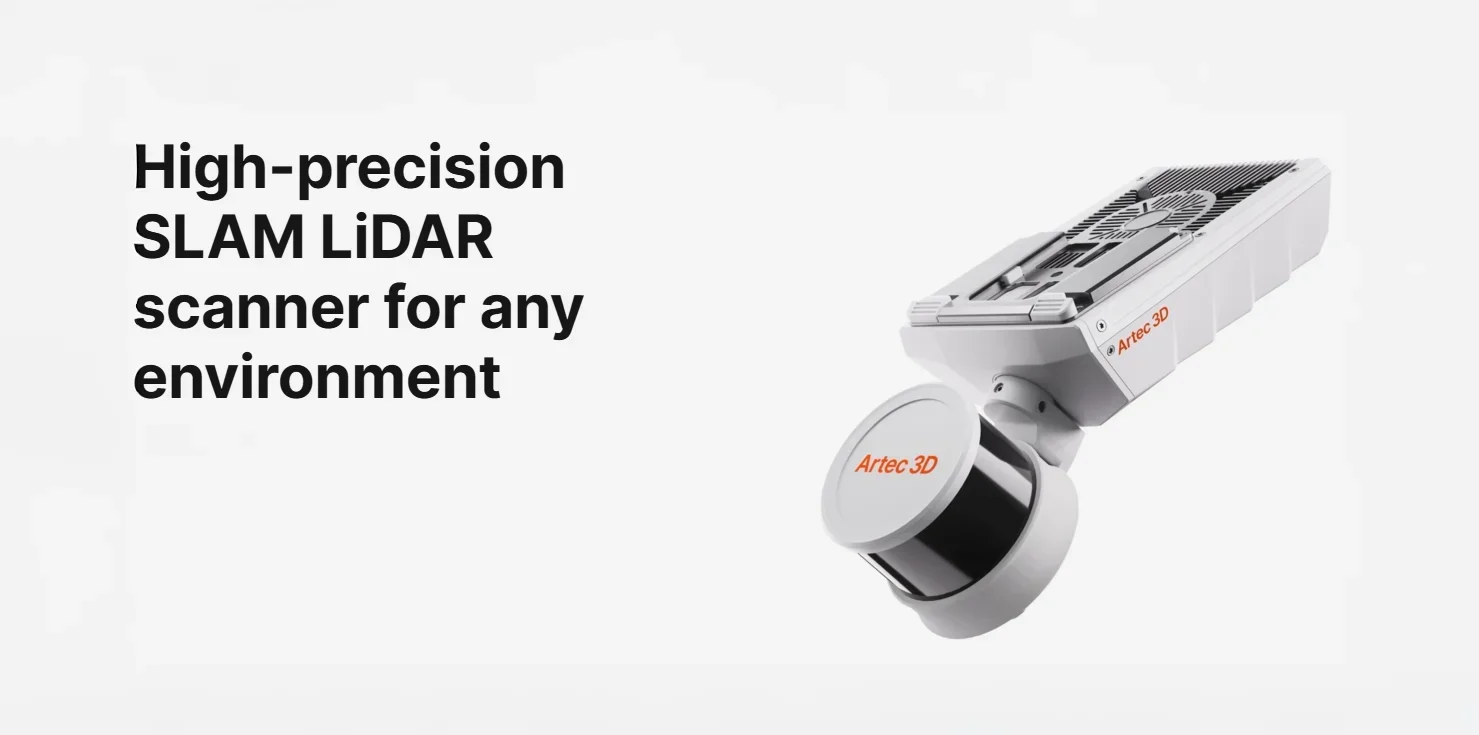
Artec Jet is a professional SLAM LiDAR scanner built for large scale 3D mapping. With 10 mm indoor accuracy, 300 m range and autonomous drone operation it targets industries like mining, construction sites, and infrastructure (NOT the prosumer market) But If you’re comparing this to handheld scanners like the 3DMakerPro Eagle or Raven, the Jet operates in a different scale in both price and workflow: think entire tunnel networks and infrastructure construction sites and hazardous environments, not really the room, to warehouse scales.
What Is the Artec Jet?
Artec 3D, known for professional 3D scanners like Artec Leo and Artec Eva has launched the Artec Jet: a SLAM-based LiDAR system designed for large scale reality capture. It represents a significant move into mobile mapping territory.
Where Artec’s existing scanners focus on object-level and component-level detail (except for the Artec Ray) the Jet is built to capture entire sites, facilities, and infrastructure. It’s deployable by hand, backpack, vehicle, monopods, robotics, or drone, using distinct “deployment modes”, more on that later.
The Jet ships with the new Artec Twins software platform that is specifically designed for large scale point cloud processing, georeferencing, merging, and export.
Key Specifications
Here are the key features and specs (Artecs data)
Mapping method: SLAM-based LiDAR mapping, ±0.03% drift
Mapping accuracy: ±10 mm indoors/underground, ±15 mm general environments
Change detection: ±5 mm
LiDAR range: 0.5–300 m
Field of view: 360° × 290°
Point acquisition: Up to 1,920,000 pts/sec (triple return), Up to 640,000 points/second (single return)
Weight: 1.57 kg
Max travel speed: Vehicle: 60 Km/h, flight (above ground): 5m/s and flight (underground): 2m/s.
Storage: 512 GB onboard (~16 hours of data)
Color: Optional via mounted action camera
Export formats: LAS, LAZ, PLY, E57
Outputs: Full resolution point cloud, decimated point cloud, trajectory file
Point attributes: Intensity, range, time, return number (strongest, first & last), ring number, RGB/true color (optional)
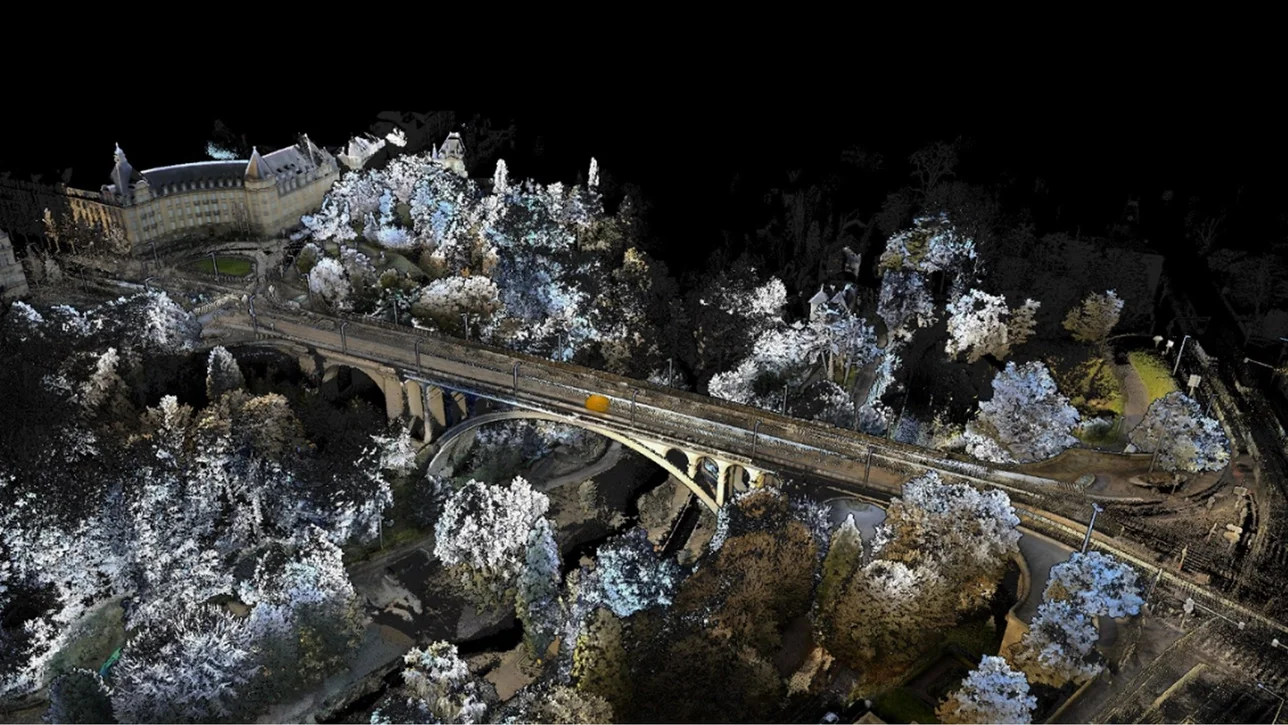
The 360° × 290° field of view is notably wide, meaning near-complete spherical coverage per scan pass. The triple-return mode captures close to 2 million points per second, a significant step up from consumer LiDAR scanners currently on the market.
Autonomous Drone Feature
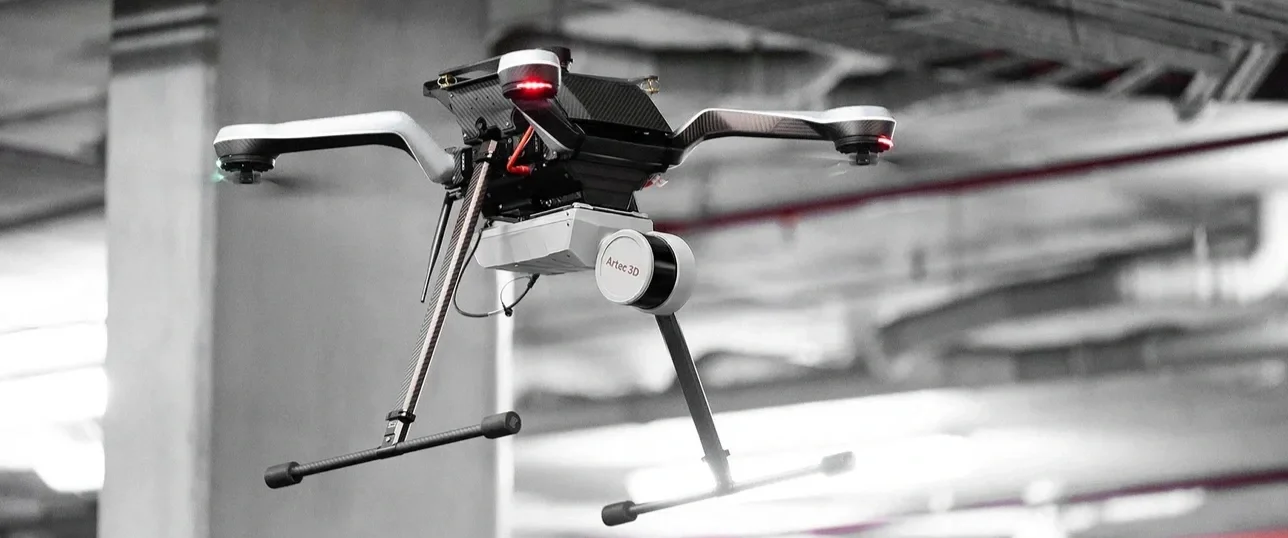
The most interesting feature is arguably the fully autonomous drone operation. The Jet uses its own SLAM algorithms and AI-powered navigation to independently plan flight paths, avoid obstacles (even detecting wires as thin as 2 mm), and return to base if battery drops below safe levels.
The system can enter GPS-denied environments like tunnels, underground mines, and unstable structures autonomously, without a pilot. For industries where sending people into hazardous spaces is a safety concern, this is a really compelling capability.
Supported drone platforms include the DJI M300, DJI M350, and Freefly Astro Max.
Comparing Artec Jet vs. Prosumer SLAM Scanners
It’s worth noting that Artec Jet is not a competitor to the 3DMakerPro Eagle, 3DMakerPro Raven, or FJD Trion scanners in the traditional sense. These devices live in different market segments and therefor with different price expectations, target users, and use cases.
But I think many of us will look at some of these specs and compare directly to an 3DmakerPro EAGLE Max and question the price. It is however a completely different experience and workflow.
Comparing the specs side-by-side shows how the technology scales from prosumer to professional:
| Spec | Artec Jet | Hawk | Eagle | FJD P2 | SHARE S20 SE | Raven |
|---|---|---|---|---|---|---|
| Accuracy | ±10 mm | 1.5 cm @10m | 2 cm @10m | 1.2 cm post | ≤1 cm rel. | 2 cm @10m |
| LiDAR Range | 300 m | 70 m | 70 m | 70 m | 70 m | 50 m |
| Field of View | 360°×290° | 360°×63.5° | 360°×59° | 360°×59° | 360°×59° | 360°×40° |
| Points/sec | 1.92M | 480K | 200K | 200K | 200K | 150K |
| Weight | 1.57 kg | ~0.9 kg | 1.5 kg | 0.7 kg | 0.955 kg | 1.1 kg |
| IP Rating | IP65 | — | — | — | — | — |
| Drone Mode | Autonomous | Manual | Manual | — | — | Manual |
| RTK | Optional | Built-in | Optional | Optional | Optional | Optional |
| Standalone | Yes | Yes | Yes | No (phone) | No (phone) | Yes |
| Color | Opt. cam | 13MP 1" | 1–4× 48MP | 2× 12MP | 2× 2.3MP | 1× 12MP |
| Battery | External | ~1 hr | ~1 hr | ~4 hrs | ~3 hrs | ~2 hrs |
| Price (est.) | ~$29,700* | ~$8,999+ | ~$1,799+ | ~$4,000+ | ~$4,499+ | $999 |
The Artec Jet adds autonomous drone navigation, IP65 environmental protection, industrial deployment modes (cage, robot, vehicle mount), and a dedicated software pipeline. These are capabilities that simply don’t exist in the prosumer segment.
For anyone considering a prosumer scanner, the 3DMakerPro Raven at $999 orthe Eagle remain great entry points for room to small warehouse scale scanning, Gaussian Splatting workflows, and content creation. They’re standalone, handheld, and designed for individuals and small teams. The Artec Jet is enterprise infrastructure.
SLAM LiDAR Market Context
Artec already had LiDAR in their lineup: the Artec Ray II is a tripod-mounted stationary scanner with 1.9 mm accuracy, designed for capturing large objects and scenes from fixed positions.
What the Jet adds is mobility: SLAM-based scanning while moving, across entire sites, including places where you can’t set up a tripod at all. The Jet now covers the site-scale walkthrough (or flythroughs) capture that previously required going outside Artec’s ecosystem entirely, to systems from Leica (BLK2GO/BLK2FLY), GeoSLAM, or Emesent Hovermap.
The main advantage for existing Artec customers is workflow integration. Scanning a tunnel with the Jet, then capturing a specific valve assembly with an Artec Leo, and pulling both into Artec Twins is a pipeline the dedicated mobile-mapping competitors can’t replicate natively. For teams already using Artec hardware, the Jet is a logical addition rather than a separate investment.
For prosumers shopping for an Eagle or Raven, the Jet doesn’t change the equation on whats “best value”, but some of these features like real-time SLAM feedback, different deployment methods and better sensors enabling faster and wider scanning will likely show up in more affordable hardware over the coming years.
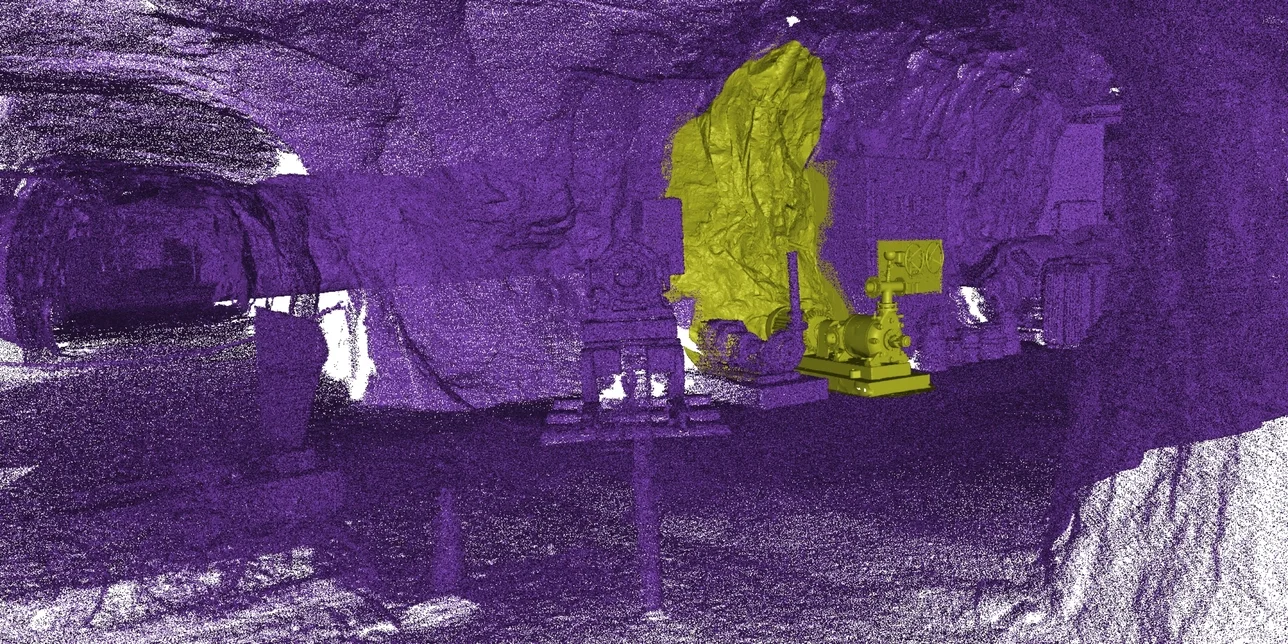
The purple point cloud comes from Artec Jet, while the yellow mesh is a detailed scan from an handheld structured light - Combined in one dataset.
Artec Twins Software
The Jet doesn’t use Artec Studio (Artec’s existing scan processing software). Instead, it ships with Artec Twins. A new platform built for large scale point cloud workflows: processing, georeferencing, merging multi-session scans, visualization, and analysis including change detection. Exports in well-known formats: LAS, LAZ, PLY, DXF, and E57.
Artec Studio has an excellent track record for reliability and processing quality, so there’s good reason to expect Twins will be solid from the start. It’s a different tool aimed at a different user group, where 3DMakerPro’s RayStudio or Revopoint’s Revo Scan handle single-session scans, Twins is designed for merging dozens of scans across a construction site or even a mine.
Pricing and Availability
Artec 3D has not published an official price for the Jet. However, US reseller 3DMakerWorld has listed the scanner at $29,700 USD (unconfirmed). If accurate, that puts the Jet below the Artec Leo (∼$35,000+) while still firmly in enterprise territory at roughly 30× the price of a 3DMakerPro Raven (which is just a fun comparison to do).
If you’re looking to learn more about price and availability, you should reach out to your nearest reseller from Artec 3D (not affiliated).
Bottom Line
The Artec Jet is a serious industrial tool, not a prosumer product. It extends Artec’s ecosystem from object scanning into site-scale reality capture with autonomous capabilities. For professionals in mining, AEC, infrastructure, or defense, it’s worth evaluating alongside Leica, GeoSLAM, and Emesent systems.
For anyone interested in the prosumer SLAM scanner space: the Eagle and Raven remain the relevant options for most of us, despite the lacking software (that is rapidly improving). The Jet is a look at what the top end of SLAM LiDAR currently looks like.
What is the Artec Jet 3D scanner?
The Artec Jet is a survey-grade SLAM LiDAR scanner from Artec 3D, launched in April 2026. It's designed for large-scale 3D mapping of sites, facilities, and infrastructure with up to ±10 mm accuracy and autonomous drone capability.
How much does the Artec Jet cost?
Artec has not published an official price. A US reseller (3DMakerWorld) has listed it at $29,700 USD, though this is unconfirmed. Contact Artec 3D or a local reseller for confirmed pricing.
Is the Artec Jet better than the 3DMakerPro Eagle or Raven?
They serve different markets. The Jet is an enterprise-grade system for site-scale capture (tunnels, construction sites, mines). The Eagle and Raven are prosumer handheld scanners for room-scale environments and content creation at a fraction of the price.
Can the Artec Jet scan autonomously on a drone?
Yes. The Jet uses AI-powered navigation and SLAM-based positioning to fly autonomously, avoid obstacles (down to 2 mm wires), and return to base automatically. It works in GPS-denied environments including underground spaces and complete darkness.
What software does the Artec Jet use?
The Jet uses Artec Twins, a new processing and visualization platform built for large-scale point cloud data. It supports georeferencing, multi-scan merging, change detection, and export to LAS, LAZ, PLY, DXF, and E57 formats. Given Artec Studio's strong track record, there's good reason to expect Twins will be solid from the start.
Does the Artec Jet capture color?
Not by default. LiDAR data includes intensity information. For true-color (RGB) point clouds, an optional action camera can be mounted on the scanner, with colorization handled in Artec Twins during processing.
How does the Artec Jet compare to the Artec Ray II?
The Ray II is a stationary tripod-mounted LiDAR scanner with 1.9 mm accuracy — great for capturing large objects and scenes from fixed positions. The Jet is a mobile SLAM scanner designed for walk-through or fly-through site capture. They complement each other: Jet for site-scale coverage, Ray II for high-accuracy detail from fixed setups.
